
Frequently asked plumbing questions.
Answers to common questions about water heaters, repiping, drains, fixtures, remodeling, construction and other A. Plumbing Pro services.
Water Heaters
View service page →What size tank water heater is right for my home?
A 50-gallon tank water heater will typically provide sufficient hot water for a household of three to five people. The appropriate size can vary with hot-water usage, number of bathrooms and appliances.
Should I choose a gas or electric tank water heater?
The choice largely depends on whether the home has gas service and the connections already available. Installation requirements, operating costs, available space and venting should also be considered.
How long does a tank water heater typically last?
A tank water heater typically lasts approximately six to ten years. Water quality, usage, maintenance, installation conditions and unit quality can all affect service life.
How long does it take to replace a tank water heater?
A standard tank water heater replacement takes approximately two hours on average. More time may be needed for plumbing, electrical, gas, venting or code-related modifications.
Does a water heater replacement require a permit?
Permit requirements vary by jurisdiction and property type. Some single-family replacements may not require a permit, while apartments, condominiums and certain municipalities may require permitting, inspections or property-management approval.
What maintenance does a tank water heater need?
Periodic flushing is recommended to help remove sediment buildup and support efficient operation. Maintenance needs can vary with manufacturer recommendations and water quality.
Should the new water heater include an expansion tank?
An approved thermal expansion control device may be required depending on the plumbing system and local code requirements. This can include an expansion tank or another code-compliant expansion-control device on the cold-water supply.
What warranties are available on tank water heaters?
Many standard tank water heaters include a six-year limited manufacturer warranty, with some extended options available. Manufacturer coverage varies by model and generally does not include installation labor. A. Plumbing Pro provides a one-year labor warranty on qualifying work.
Can the new water heater be installed in a different location?
Often, yes. Relocation may require changes to water piping, drainage, electrical wiring, gas piping or venting, and another licensed trade may be needed depending on the unit and new location.
Tankless Water Heaters
View service page →What size tankless water heater does my home need?
Sizing depends on the size of the home, fixtures that may run at the same time, household hot-water demand and the capacity of the gas or electrical service. We can evaluate these factors and recommend an appropriate system.
Is a tankless water heater suitable for my household’s hot-water demand?
A properly sized tankless system can provide reliable hot water for many households. Simultaneous fixture use, incoming water temperature and available gas or electrical capacity all affect suitability.
Can a tank water heater be replaced with a tankless system?
Yes. Conversions are often most straightforward when natural gas or propane is available. Electric tankless conversions may require significant electrical upgrades, so both a licensed plumber and electrician may be needed.
Will my gas, electrical, venting or water lines need to be upgraded?
Upgrades are often required when converting to tankless. The existing gas supply, electrical service, venting, water piping and installation location must be evaluated individually.
How long does a tankless water heater installation take?
A typical installation takes approximately four to eight hours. Additional time may be required for gas, electrical, venting, plumbing or code-related upgrades.
Does a tankless water heater installation require a permit?
Permit requirements vary by jurisdiction and property type. Some installations may not require a permit, while apartments, condominiums and certain municipalities may require permits, inspections or property-management approval.
How often should a tankless water heater be flushed or serviced?
Tankless water heaters should generally be flushed and serviced once per year. Regular maintenance helps reduce mineral buildup, maintain efficiency and protect manufacturer warranty requirements.
How long does a tankless water heater typically last?
A tankless water heater typically lasts approximately 10 to 20 years. Service life depends on the unit, water quality, usage, installation conditions and routine maintenance.
What warranties are available on tankless water heaters?
Manufacturer warranties vary by brand, model, fuel type and residential or commercial application. Coverage may differ for heat exchangers, parts and labor, and manufacturers may require maintenance documentation for warranty claims.
Whole-House PEX Repiping
View service page →What is included in a whole-house PEX repipe?
A whole-house repipe generally replaces the existing hot- and cold-water distribution piping with new PEX and reconnects the plumbing fixtures. The exact scope can also include fixture shutoff valves, supply connections and other components specified in the proposal. Drain and vent piping are not normally part of a water-supply repipe.
How long does a whole-house repiping project usually take?
Most whole-house repiping projects can be completed within one to several days. Timing depends on the size and layout of the home, number of fixtures, accessibility and the amount of wall or ceiling access required.
Will the home’s water need to be turned off during the project?
Yes. Water must be shut off while portions of the new system are connected. We work to minimize downtime and, when possible, restore water service at the end of each workday.
How much wall or ceiling access is typically required?
PEX is flexible and can often be routed with smaller and fewer access openings than more rigid piping. Some drywall or ceiling access is usually necessary, and the amount depends on the construction and layout of the home.
Who repairs the drywall after the repipe?
Drywall and finish repairs are generally performed by a drywall or remodeling contractor unless specifically included in the plumbing proposal. A. Plumbing Pro makes the openings needed for the plumbing work and can coordinate with other trades when appropriate.
Does a whole-house repipe require a permit and inspections?
Permit and inspection requirements depend on the jurisdiction and scope. When required, the work must be completed to the applicable plumbing code and approved by the local authority.
Will the existing shutoff valves and supply lines be replaced?
Fixture shutoff valves and supply connections may be replaced based on age, condition, compatibility and the agreed project scope. Deteriorated, corroded or unsuitable components are generally recommended for replacement.
What warranties are available on the piping and labor?
PEX manufacturers typically provide limited warranties on approved piping and components when properly installed; terms vary by brand and system. A. Plumbing Pro provides a one-year labor warranty on qualifying work.
Can the home remain occupied during the repiping project?
In most cases, yes. There will be periods when water is unavailable, and portions of the home must remain accessible to the plumbing crew during the project.
Drain Cleaning
View service page →What drain-cleaning methods do you offer?
The appropriate method depends on the type of drain, piping material, accessibility and condition of the drainage system. Professional drain cleaning may include mechanical cable or drain-machine cleaning and, when appropriate, other cleaning methods based on the plumbing system.
How is the appropriate cleaning method selected?
The method is selected based on the size and material of the drain piping, the location being serviced, accessibility, the condition of the plumbing and the type of buildup present. Older or deteriorated piping may require a more conservative approach.
Is camera inspection included with drain cleaning?
A camera inspection is a separate diagnostic service unless specifically included in the quoted scope. It may be recommended when additional information is needed about the condition, routing or interior of a drain or sewer line.
How long does professional drain cleaning usually take?
Many drain-cleaning services can be completed within one to two hours. Actual time depends on the drain location, access, line length and condition of the plumbing system.
Can all types of plumbing pipes be professionally cleaned?
Most drain-piping materials can be professionally cleaned, but the method must be appropriate for the type, age and condition of the piping. Fragile, deteriorated or damaged piping may require special consideration.
Is drain cleaning safe for older plumbing systems?
It can be, provided the condition and material of the piping are considered when selecting the cleaning method. Older cast iron, galvanized, clay or other deteriorated piping may require a more cautious approach.
Does the service include cleaning through an existing cleanout?
When an accessible and properly located cleanout is available, it may provide the best access point. If no suitable cleanout exists, another access point may need to be used or additional work may be required.
Is there a warranty or service guarantee on drain cleaning?
No. Drain cleaning services are not covered by a warranty or service guarantee. Cleaning removes existing buildup or blockages but cannot prevent future buildup, improper use, root intrusion, or issues caused by damaged, deteriorated or improperly installed piping.
How often should preventive drain cleaning be scheduled?
There is no single schedule for every property. High-use properties, commercial kitchens, recurring buildup or a history of drainage issues may benefit from preventive cleaning, while many residential systems do not require cleaning on a fixed schedule.
Toilets, Faucets & Fixtures
View service page →Can you install fixtures that I purchase myself?
Yes. We can install customer-supplied faucets, toilets and plumbing fixtures provided they are compatible with the existing plumbing and include the required components.
Are all faucets compatible with every sink or countertop?
No. Compatibility depends on mounting holes, spacing, faucet size, mounting style and available clearance.
Can existing supply lines and shutoff valves be reused?
They may be reused when they are in good working condition, free of corrosion and compatible with the new fixture. Replacement may be recommended when they show wear or deterioration.
How long does faucet or fixture installation usually take?
A standard faucet installation typically takes approximately one to two hours. Additional time may be needed if modifications, repairs or replacement of existing plumbing components are required.
What fixture brands do you recommend?
We commonly recommend Moen, Delta and Kohler because replacement parts are widely available and these brands are generally easier to service over time.
What is the difference between a one-piece and two-piece toilet?
A one-piece toilet combines the tank and bowl into one unit and is generally easier to clean. A two-piece toilet has a separate tank and bowl and is often more affordable and easier to move or service.
What toilet measurement is most important before replacement?
The rough-in distance is critical: measure from the finished wall, not the baseboard, to the center of the toilet floor bolts. Most toilets use a 12-inch rough-in, although 10-inch models are also available.
Can you install a toilet that I purchase myself?
Yes, provided it is compatible with the existing rough-in, available space and plumbing connections and includes the necessary components.
How long does toilet replacement usually take?
A standard toilet replacement typically takes approximately one to two hours. Additional time may be needed if the flange, shutoff valve, flooring or surrounding plumbing requires repair or modification.
Will the existing toilet flange need to be replaced?
The existing flange can usually be reused if it is secure, properly positioned and free of cracks, corrosion or other damage. Repair or replacement may be required when the flange is unsuitable.
Are dual-flush or high-efficiency toilets worth considering?
They can be a good choice for customers who want to reduce water consumption. Performance varies by model, so selecting a well-designed toilet from a reputable manufacturer is important.
Is installation labor covered by the manufacturer’s warranty?
Manufacturer warranties generally cover the fixture or specified replacement parts, but they do not typically cover labor required to remove, repair or reinstall the fixture.
Garbage Disposals
View service page →What size or horsepower garbage disposal should I choose?
The right horsepower depends on household size, cooking habits, frequency of use and budget. Higher-horsepower models generally provide greater grinding capacity.
Can a garbage disposal be installed in any kitchen sink?
A disposal can be installed with most standard kitchen sinks when there is adequate space below and the sink opening, drain piping and electrical setup are compatible.
Does a garbage disposal require a dedicated electrical connection or switch?
A disposal requires a properly installed electrical connection and operating switch or approved control. If the sink area is not already wired for a disposal, a licensed electrician may be needed.
Can a garbage disposal be used with a septic system?
Yes, but food waste should be disposed of sparingly to avoid unnecessary strain on the septic system. Proper septic-system maintenance remains important.
How long does garbage disposal installation take?
A standard installation typically takes approximately one to two hours. More time may be needed if the drain piping, sink connection or electrical system requires modification.
What materials should not be placed in a garbage disposal?
Avoid fats, butter, oil, grease, coffee grounds, eggshells, bones, shells, fruit pits, large seeds, nuts, oatmeal and non-food waste. Fibrous and starchy foods are generally safer in the trash.
How long does a garbage disposal typically last?
Service life varies widely based on the quality of the unit, frequency of use, what is placed in it and how well it is maintained.
Can the existing sink flange and drain connections be reused?
New disposals typically include a compatible sink flange and mounting components, which are generally installed with the unit. Existing drain piping may be reused if it is in good condition and aligns correctly.
What warranties are available on a new garbage disposal?
Manufacturer warranties vary by brand and model and commonly range from two to five years, with some premium models offering longer coverage. Manufacturer coverage generally does not include installation labor.
Shower Valves
View service page →What type of shower valve should I install?
The best valve depends on desired features, budget and the existing plumbing. Pressure-balance valves are common for standard showers, while thermostatic valves provide more precise temperature control and are often used in higher-end or multi-function systems.
What is the difference between pressure-balance and thermostatic valves?
A pressure-balance valve responds to changes in hot and cold water pressure to help maintain temperature. A thermostatic valve senses and regulates actual water temperature for more precise control.
Can a shower valve be replaced without removing all of the tile?
In many cases, yes. Access may be possible from the wall behind the shower or by carefully enlarging the existing valve opening. A renovation trim plate may sometimes cover a larger access opening.
Can I keep the existing shower trim when replacing the valve?
It depends on the manufacturer and valve model. Trim, cartridges and valve bodies are designed for specific systems, so existing trim can generally only be reused when it is compatible.
Are shower valves and trim kits interchangeable between brands?
Generally, no. Valves, cartridges, handles and trim kits are usually manufacturer- and model-specific, and even within a brand not every trim collection fits every valve body.
How long does shower valve installation or replacement take?
A standard replacement can typically be completed within a few hours when plumbing is readily accessible. Additional time may be required for wall access, piping modifications or multiple shower components.
Can separate volume and temperature controls be installed?
Yes. Certain thermostatic and multi-function systems allow temperature and water volume to be controlled separately and may also serve multiple components such as a showerhead and handheld.
Does a new shower valve need to meet anti-scald requirements?
Yes. New shower valves must meet applicable plumbing-code requirements for temperature protection, and maximum temperature settings must be adjusted according to code and manufacturer instructions.
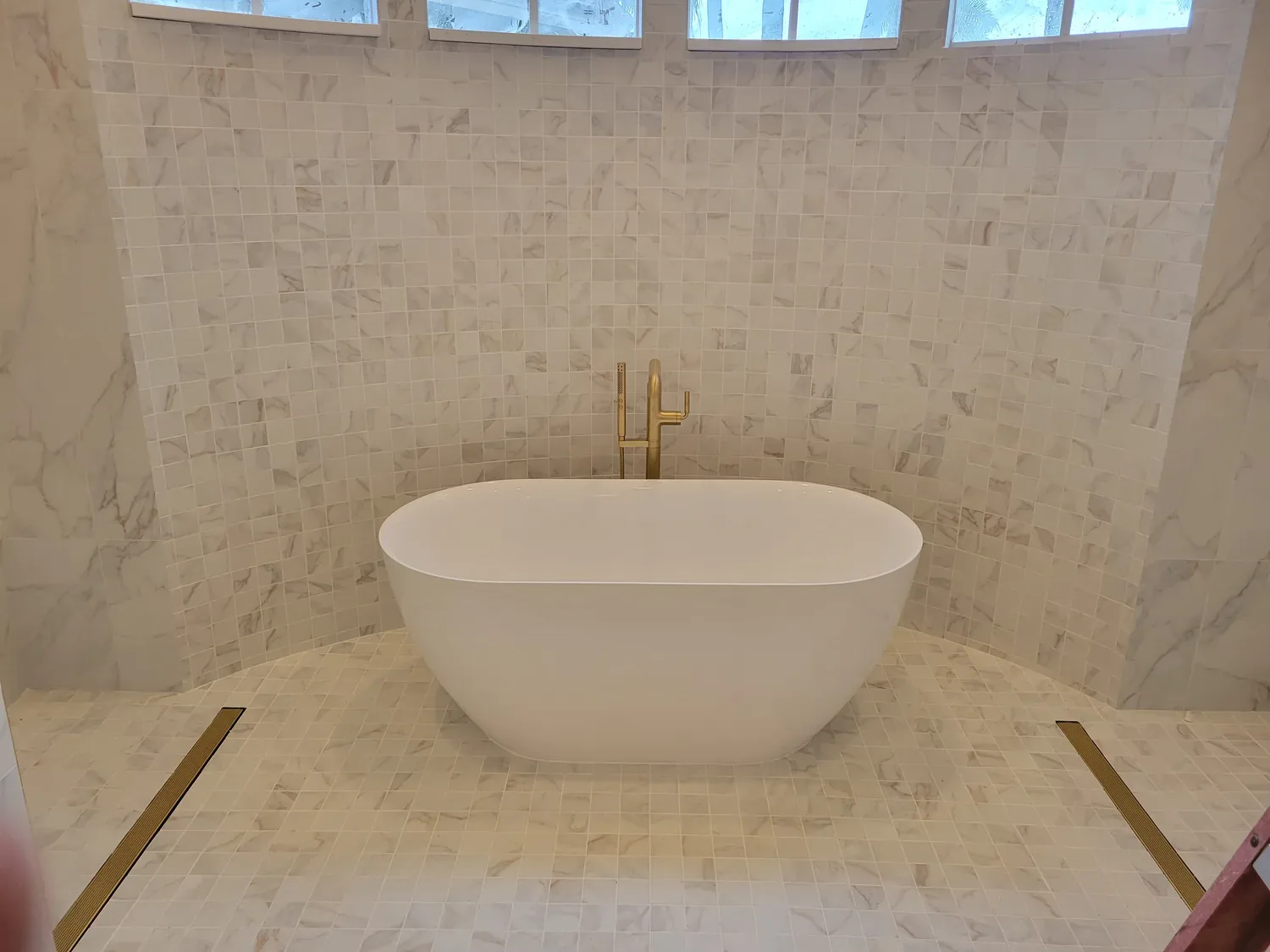
Freestanding Tubs
View service page →What plumbing is required for a freestanding tub?
A freestanding tub requires properly located hot- and cold-water supplies, a compatible tub filler, and a drain and overflow system connected to the sanitary drainage system. Exact requirements depend on the tub, faucet style, existing plumbing and installation location.
Can a freestanding tub be installed where an existing tub was located?
Yes, in many cases. Existing drain and water-supply locations may need to be relocated or modified for the new tub and faucet.
Does the floor need additional support for the tub?
It depends on the weight of the tub, the amount of water it holds and the existing floor structure. Heavier materials such as cast iron or stone may require additional structural support.
What type of drain assembly is needed?
Freestanding tubs typically require a drain and overflow assembly designed for the specific tub and installation method. Because access may be limited after installation, the correct assembly and a secure connection are especially important.
Should the faucet be floor-mounted, wall-mounted or deck-mounted?
The choice depends on the tub design, bathroom layout and customer preference. Floor-mounted fillers work well away from walls; wall-mounted faucets can offer a clean look; deck-mounted faucets require a tub designed to accept them.
Does the faucet need to be installed before the tub is placed?
The plumbing and faucet rough-in should generally be completed before the tub is placed, especially for floor-mounted or concealed-valve installations. Manufacturer instructions should guide the exact sequence.
How much space is needed around a freestanding tub?
Clearance depends on the tub dimensions, faucet location, room layout and manufacturer recommendations. Space should allow for installation, cleaning, maintenance and comfortable use.
Does the installation require a permit?
Permit requirements vary by jurisdiction and project scope. A simple fixture replacement may be treated differently from work that relocates water or drain piping.
How long does freestanding tub installation take?
A straightforward installation can often be completed within several hours. More time may be required when plumbing must be relocated, a floor-mounted filler is installed, structural modifications are necessary or other trades must be coordinated.
Who is responsible for flooring, tile, waterproofing and finish work?
Our scope is focused on the plumbing portion. Flooring, tile, waterproofing, drywall, painting, cabinetry and other finish work are typically completed by the appropriate contractor or trade unless specifically included in the proposal.
Recirculating Pumps
View service page →How does a hot-water recirculating pump work?
A hot-water recirculating pump keeps hot water moving through the plumbing system so it is available more quickly when a faucet or shower is turned on. Systems may use a dedicated return line or a specially designed crossover connection.
What are the benefits of installing a recirculating system?
The primary benefit is convenience: less waiting for hot water to reach a fixture. It can also reduce the amount of water that would otherwise be wasted while waiting.
Can a recirculating pump be added to an existing plumbing system?
Yes. The best system depends on how the home is plumbed and whether a dedicated hot-water return line already exists. Homes without a return line may still have options that do not require extensive repiping.
Can the pump operate on a timer, thermostat or demand control?
Yes. Depending on the system, a recirculating pump can be controlled by a timer, temperature sensor or demand-activated control so it operates only when needed.
Will a recirculating pump increase energy use?
A pump uses electricity, and continuously circulating hot water can increase piping heat loss. Timers, thermostats, demand controls and insulated hot-water lines can reduce unnecessary energy use.
How long does installation usually take?
A typical installation can often be completed within a few hours. Time depends on the type of system, existing plumbing layout, accessibility and whether additional piping or electrical work is required.
What maintenance does a recirculating pump require?
Recirculating pumps generally require minimal maintenance. Periodic inspection is recommended to make sure the pump, valves, controls and connections are operating properly.
Backflow Services
View service page →What is a backflow prevention device?
A backflow prevention device is designed to prevent water or other substances from flowing backward into the potable water supply. These devices help protect the drinking-water system from contamination that could occur through a cross-connection.
When is a backflow preventer required?
Backflow protection may be required when a plumbing system presents a potential connection between the potable water supply and another water source or system. Common applications include irrigation systems, fire-protection systems, commercial properties, reclaimed-water environments and other installations identified by the water provider or plumbing code.
What type of backflow device does my property need?
The appropriate device depends on the type of connection and the level of potential hazard. Common devices include reduced-pressure assemblies, double-check assemblies and pressure vacuum breakers. The water provider or applicable plumbing requirements determine which type of protection is appropriate for a particular application.
Will the water need to be shut off during repair or replacement?
The water supply may need to be temporarily shut off while the assembly is being repaired or replaced. The duration depends on the type of device and the work required.
Does a new backflow device require a permit?
Permit requirements vary by jurisdiction, property type and type of installation. New installations or significant modifications may require permitting, inspection and approval from the local water provider or authority having jurisdiction.
Can an existing backflow device be repaired, or must it be replaced?
Many backflow prevention assemblies can be repaired when replacement parts are available and the body of the device remains in serviceable condition. Replacement may be recommended when the assembly is severely deteriorated, damaged, obsolete or no longer meets applicable requirements.
Remodeling Plumbing
View service page →What plumbing work is typically included in a bathroom or kitchen remodel?
Remodeling plumbing may include relocating or replacing water-supply and drain piping, installing new valves and shutoffs, modifying plumbing for a new layout, and installing sinks, faucets, toilets, showers, tubs, disposals, dishwashers and other plumbing fixtures. The exact scope depends on the project design.
Can plumbing fixtures be moved to new locations?
Yes. Sinks, toilets, showers, tubs and other fixtures can often be relocated, but moving them may require modifications to water, drain and vent piping. Structural conditions, available drainage paths and code requirements can affect where fixtures can be placed.
Does relocating plumbing require permits or inspections?
Relocating or substantially altering plumbing may require permits and inspections. This is especially common when drain, vent or water-distribution piping is being modified.
When should the plumber become involved in the remodeling process?
Ideally, the plumber should be involved during the planning stage before cabinetry, fixtures, flooring and finishes are finalized. Early coordination can help identify plumbing limitations, confirm fixture requirements and prevent costly changes after construction begins.
Can you work from architectural or designer plans?
Yes. We can work from architectural, designer, engineering or contractor plans and coordinate the plumbing installation with the approved project layout. Complete and accurate plans also help us prepare a more accurate scope and proposal.
Who supplies the sinks, faucets, tubs, toilets and other fixtures?
Many customers prefer to select and purchase their own fixtures so they can choose the style, finish, features and price that best match their preferences. We can install customer-supplied fixtures provided they are appropriate for the installation and include the necessary components.
Can you coordinate with the general contractor, electrician and tile installer?
Yes. Remodeling projects often require coordination between multiple trades. We can coordinate the plumbing schedule and installation requirements with the general contractor and other trades to help keep the project moving efficiently.
How are plumbing changes handled after construction begins?
Changes made after work begins should be reviewed before proceeding because they may affect labor, materials, scheduling, permits or other trades. Work outside the original scope should be documented and approved as a change order before the additional work is completed.
What plumbing inspections are typically required?
Inspection requirements vary according to the project and jurisdiction. Depending on the scope, inspections may be required after rough plumbing is installed and again after fixtures and plumbing systems are completed.
What warranties are provided on remodeling plumbing work?
Manufacturer warranties apply to qualifying fixtures and plumbing products according to each manufacturer’s terms. A. Plumbing Pro provides a one-year labor warranty on qualifying installation work; the specific project proposal identifies the applicable coverage and scope.
New-Construction Plumbing
View service page →What phases are included in new-construction plumbing?
New-construction plumbing generally includes underground plumbing, water and drainage rough-in, vent piping, water distribution, installation of required valves and equipment, fixture installation, testing, inspections and final plumbing connections. The exact phases depend on the construction plans and project scope.
When should the plumbing contractor become involved in the project?
The plumbing contractor should ideally become involved during the planning and bidding stages. Early involvement allows plumbing requirements to be coordinated with the building design, structural components, mechanical systems, electrical work, cabinetry and other trades before construction begins.
Do you provide plumbing estimates from construction plans?
Yes. A detailed plumbing proposal can be prepared from complete construction drawings and specifications. The more complete the plans and fixture information are, the more accurately the project can be priced.
Who is responsible for plumbing permits and inspections?
Responsibility should be established before the project begins and identified in the construction agreement. Depending on the project structure, the plumbing contractor or general contractor may coordinate plumbing permits and required inspections.
Can you help with fixture selections and plumbing specifications?
Yes. We can help review proposed plumbing fixtures and equipment to confirm that they are appropriate for the planned installation and compatible with the required plumbing connections.
What information is needed to prepare an accurate proposal?
Complete architectural and plumbing plans, project specifications, fixture schedules, equipment selections, construction schedule, site information and a clear definition of the plumbing scope are helpful when preparing an accurate proposal. Missing or undecided items may need to be carried as allowances or exclusions.
How are plumbing allowances and change orders handled?
Allowances are used when specific materials, fixtures or portions of the work have not yet been finalized. Changes to the approved plans or original scope should be documented through a written change order identifying any adjustment to price or schedule before the additional work proceeds.
Do you coordinate with builders, architects and other trades?
Yes. Plumbing construction requires coordination with the general contractor, architect, structural trades, electricians, HVAC contractors, cabinet installers and other project participants. Coordination helps ensure the plumbing is installed in the correct locations and at the appropriate stage of construction.
Are underground, rough-in, top-out and final plumbing included?
These phases can be included as part of a complete new-construction plumbing scope. The proposal should clearly identify which phases, fixtures, equipment, testing, permits and inspections are included so all parties understand the extent of the work.
What warranties are provided after construction is completed?
Plumbing fixtures, equipment and materials are covered according to the applicable manufacturer warranties. A. Plumbing Pro provides a one-year labor warranty on qualifying workmanship; project-specific warranty terms should also be identified in the construction agreement.
Commercial Plumbing
View service page →What commercial plumbing work is included in a tenant buildout?
Commercial tenant buildout plumbing may include demolition or modification of existing plumbing, new water, drain and vent piping, restrooms, breakroom or kitchen plumbing, water heaters, floor drains, service sinks, plumbing fixtures and connections for equipment. The scope is determined by the approved plans and intended use of the space.
What plans or documents are needed for an estimate?
Complete architectural and plumbing plans are preferred. Fixture schedules, equipment specifications, landlord or property-management requirements, project specifications and the proposed construction schedule are also helpful when preparing an accurate estimate.
Can you work directly with the general contractor or property manager?
Yes. We can coordinate directly with the general contractor, construction manager, property manager, building representative or other authorized project contact to schedule and complete the plumbing portion of the buildout.
Who is responsible for plumbing permits and inspections?
Responsibility for permitting should be established before work begins. Depending on the project structure and jurisdiction, plumbing permits and inspections may be coordinated by the plumbing contractor or as part of the general contractor’s overall permitting process.
Can existing plumbing be reused for the new tenant layout?
In many cases, portions of the existing plumbing can be reused if they are properly sized, appropriately located, in serviceable condition and suitable for the new occupancy and fixture requirements. Existing plumbing should be evaluated against the new plans before reuse is assumed.
How are fixture counts and plumbing requirements determined?
Fixture quantities and plumbing requirements are established by the approved construction plans and applicable building, plumbing, accessibility and occupancy requirements. The size and intended use of the tenant space can affect the number and type of fixtures required.
Can you install ADA-compliant restroom fixtures and plumbing?
Yes. We can install plumbing fixtures and components in accordance with the approved accessibility requirements for the project. Accessibility compliance involves more than selecting an accessible toilet or lavatory; fixture placement, clearances, mounting heights, controls and surrounding construction must also meet applicable requirements.
How are after-hours work and building access coordinated?
After-hours work and access requirements should be established with the general contractor, property manager or building management before scheduling. Special access procedures, security requirements, water-shutdown restrictions or work-hour limitations should be identified in advance.
How are change orders and unforeseen conditions handled?
Commercial renovations frequently uncover existing conditions that could not be confirmed before demolition. Work outside the original plans or contracted scope should be documented in a change order identifying the additional work and any effect on cost or schedule before proceeding whenever possible.
Do you provide closeout documents, warranties and inspection records?
Closeout documentation can include applicable manufacturer warranty information, plumbing inspection records, approved change documentation and other project records required by the contract. Specific closeout requirements should be identified in the project documents so they can be collected throughout construction.
Didn't find your question?
Send a service request or call the office. Photos can be uploaded with an online request when they help explain the issue or project.